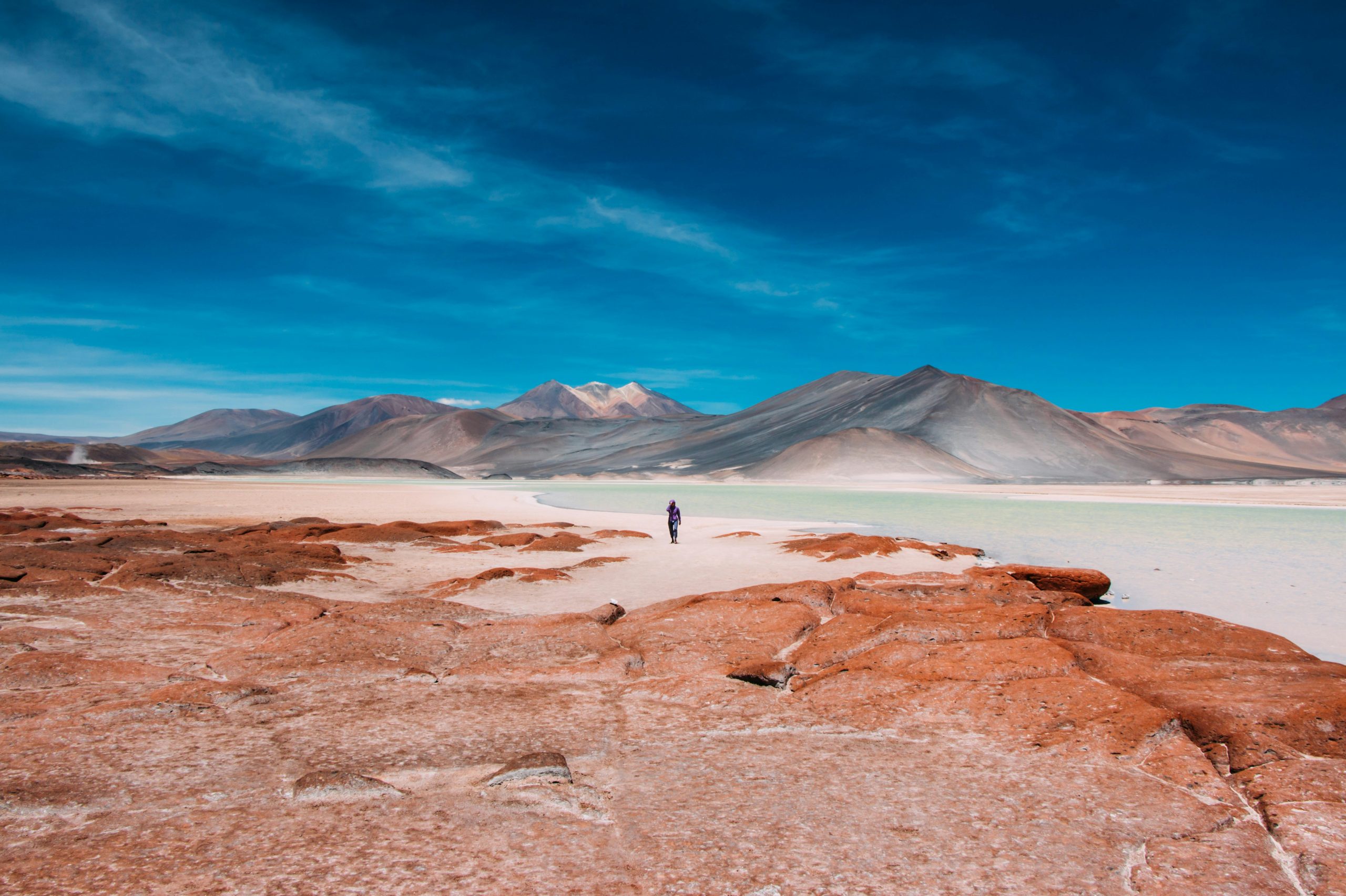
With its vast reddish expanses and sculpted forms, Atacama evokes a distant, almost unreal planet. Located in the north of Chile, this inhospitable land is, however, a true gem for travelers seeking adventure, surreal landscapes, and intense emotions.
A Desert Like no other
With its endless salt flats, lunar valleys, and multicolored lagoons, the Atacama Desert is the driest in the world. Some regions have not seen a drop of rain in centuries. Yet far from being a barren and sterile place, Atacama is full of natural wonders.
San Pedro de Atacama, once a quiet village in the mountains, is now a lively place where dusty streets welcome a vibrant life of cafés, travelers, and artisan markets... It’s the ideal starting point for exploring the region.
What to visit in the ATACAMA desert ?
1 | Valle de la Luna: the illusion of another world
It’s impossible to talk about Atacama without mentioning the Valley of the Moon. Sculpted by wind and water over millennia, this valley offers landscapes that seem to come straight from another planet: sharp ridges, golden canyons, and monumental dunes.
The magical moment? Sunset, when the light turns the ground into a sea of fire and moving shadows.
2 | Salar de Atacama: a living Salt Desert
A few kilometers south of San Pedro, the Salar de Atacama stretches over more than 3,000 km². This cracked salt desert, sparkling under the sun, is home to several turquoise lagoons.
Here, between sky and salt, graceful pink flamingos move across the landscape, offering a striking contrast against the white of the salt flats.
Among the most famous lagoons, Laguna Chaxa is an ideal spot for wildlife observation and to enjoy the absolute peace of this unreal landscape.
3 | El Tatio Geysers : a Dawn Spectacle
Located at more than 4,300 meters above sea level, the El Tatio Geysers form one of the largest geyser fields in the world.
The best time to visit is very early in the morning, when the cold air causes enormous columns of steam to rise, creating a mystical atmosphere between the boiling water and the mountains in the background.
Be sure to dress warmly: at dawn, temperatures can drop below freezing, even if the sun is shining!
4 | Laguna Miscanti and Laguna Miñiques: High Altitude Lagoons
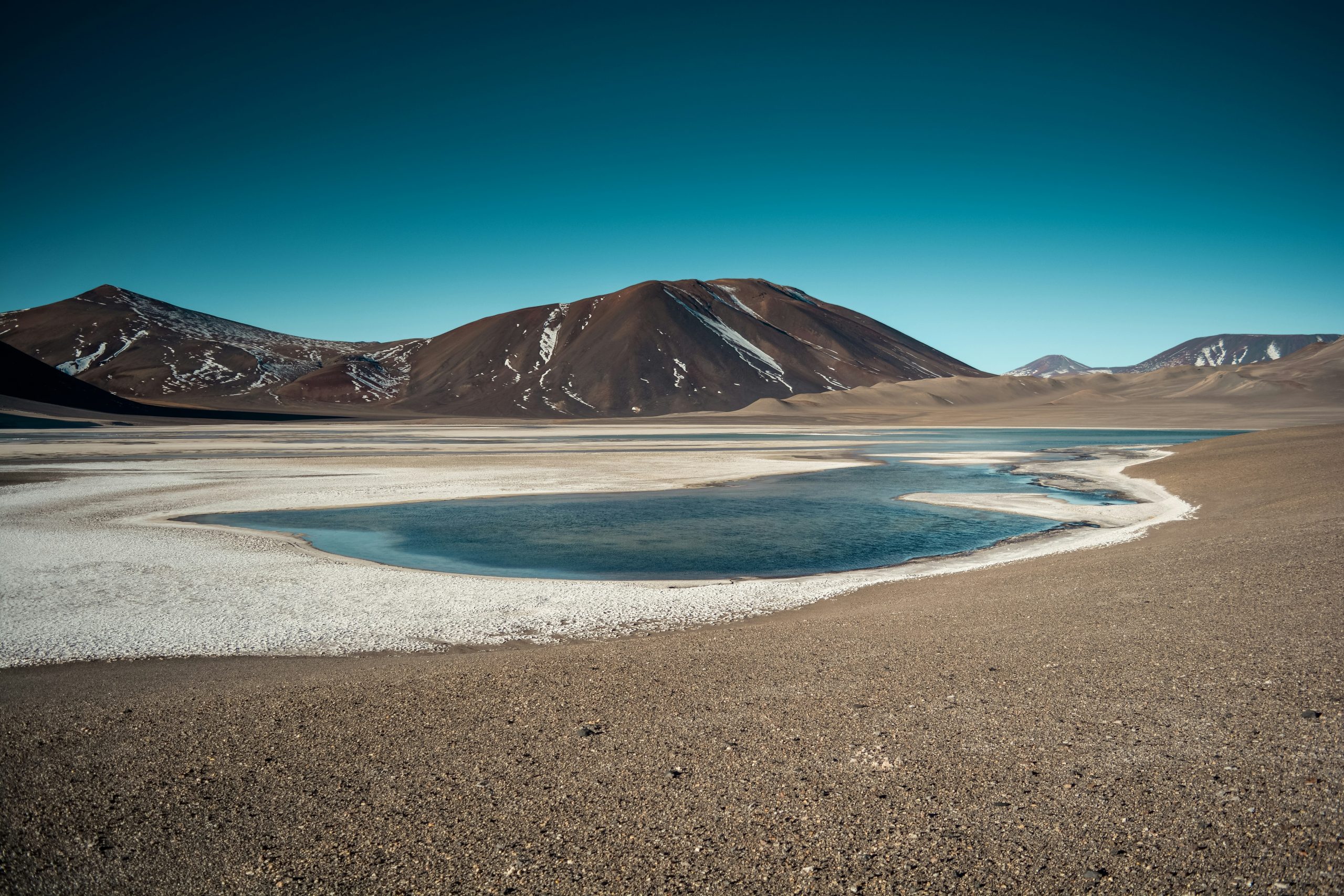
At more than 4,000 meters above sea level, nestled at the foot of the Miscanti and Miñiques volcanoes, these two lagoons offer a magical spectacle.
The water, with its deep blue color, contrasts with the ochre hills and the snow-capped peaks surrounding them. It’s one of the most breathtaking landscapes in the desert, a place perfect for feeling the power of silence and raw nature.
Vicuñas and Andean foxes are often seen roaming freely, adding to the magic of the site.
Luna Valley
Atacama Salar
The Geysers of El Tatio
Laguna Miscanti & Miñiques
Astronomer’s Paradise
Under some of the clearest and purest skies in the world, Atacama is also a prime location for astronomy. Several observatories are located here, and night excursions allow you to admire the Milky Way like never before.
At night, far from any light pollution, the sky becomes a hypnotizing spectacle.
Practical Tips for a successful Trip
- When to go? Preferably between April and November to avoid the intense heat of the Southern Hemisphere summer. The summer season is also fine but expect more crowds.
- How to get there? From Santiago, Chile, take a flight to Calama, then drive about 1.5 hours to San Pedro de Atacama.
- What to bring? Warm clothes for the cold nights, plenty of water, sunscreen, sunglasses, and... a camera with plenty of memory!
A Journey That Leaves a Mark
Visiting the Atacama Desert is like touching the raw beauty of nature. It’s feeling how extreme the Earth can be, yet how incredibly beautiful.
Each sunset, each expanse of salt or rock reminds you that some of the planet's greatest wonders are sometimes hidden where you least expect them: in the heart of the desert.
To extend the adventure,the Atacama Desert can easily be paired with the discovery of other Chilean or South American wonders, such as Patagonia, Easter Island, or the famous Salar de Uyuni in Bolivia.